
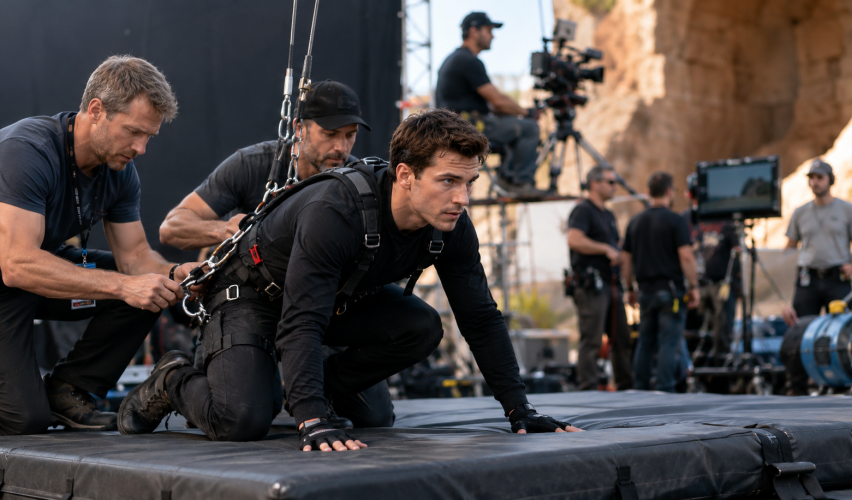
Stunt performers face some of the most demanding physical conditions in entertainment production. Falls, vehicle stunts, fights, explosions, and repeated impacts can expose performers to serious head injuries. In 2026, concussion awareness is receiving renewed attention as the industry introduces stronger safety measures for stunt professionals.
SAG-AFTRA held a dedicated concussion awareness program for stunt professionals in May 2026. The organization also reached an agreement requiring new safety training for stunt performers. These developments make concussion prevention and injury reporting especially relevant for film and television productions. SAG-AFTRA’s concussion awareness program provides additional information about the industry’s current focus.
Why Concussion Risks Matter on Film Sets
Stunt work often involves controlled impacts. Even when a stunt appears carefully planned, the body can experience substantial forces during a fall or collision.
A concussion is a type of mild traumatic brain injury. It may result from a blow, bump, or jolt to the head or body. The Centers for Disease Control and Prevention notes that symptoms may appear immediately or develop hours or days later.
That delayed presentation creates a particular challenge for productions working under demanding schedules. A performer may feel capable of continuing before symptoms become obvious.
Common concussion symptoms may include headaches, dizziness, balance problems, nausea, vision problems, fatigue, confusion, and concentration difficulties. Emotional changes and sleep problems may also occur.
Common Stunt Activities Linked to Head Injury Risks
Different stunt sequences create different physical demands. A production may involve several risk factors during a single filming day.
- Falls from platforms, stairs, vehicles, or elevated structures
- Vehicle collisions and controlled crashes
- Fight choreography involving head impacts
- Explosive or pyrotechnic sequences
- Wire work and harness-assisted falls
- Repeated takes involving physical impacts
- High-speed movement across uneven surfaces
The risk may increase when performers repeat the same sequence many times. Fatigue can also affect concentration and physical coordination.
OSHA has previously cited a motion picture company after a stunt performer suffered an injury during a vehicle stunt. The agency identified inadequate head protection as a safety concern.
New Stunt Safety Training Rules in 2026
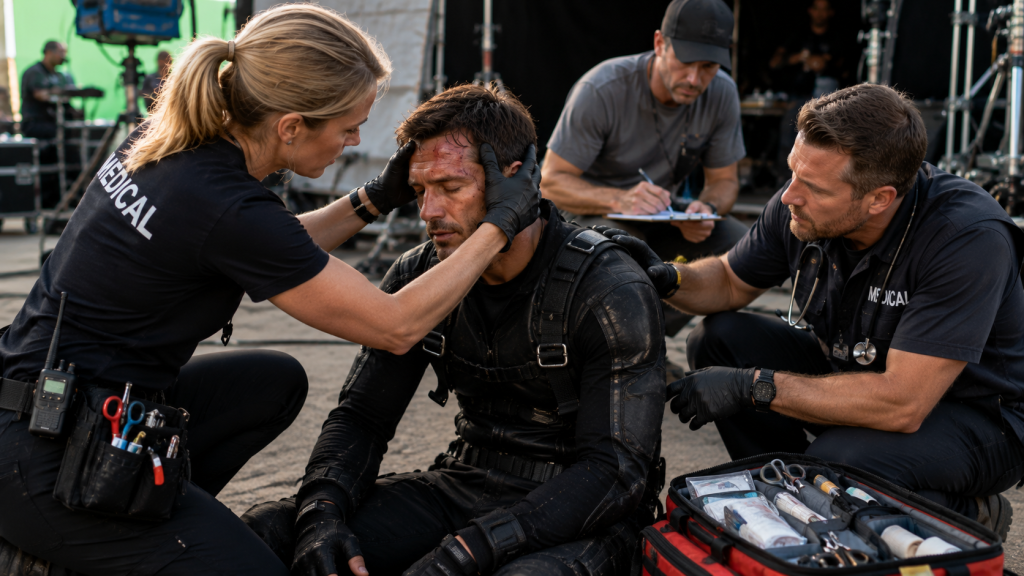
One of the most significant developments for stunt performers in 2026 involves mandatory safety training under the new SAG-AFTRA TV/Theatrical agreement.
The agreement includes a requirement for producers to develop and implement a mandatory safety training program for stunt performers. The training includes the A course covering general safety and injury prevention, along with additional Safety Pass courses covering environmental safety and hazard communication.
SAG-AFTRA’s agreement states that stunt performers must complete the specified Safety Pass courses by October 1, 2026.
This development reflects a broader focus on formal safety education within film and television production. It also gives performers and production teams a clearer framework for addressing workplace hazards.
Recognizing a Possible Concussion After a Stunt
Recognizing symptoms after an impact may be difficult when a performer remains focused on completing a scene. Some symptoms may also emerge later.
Possible warning signs include:
- Headache or pressure in the head
- Dizziness or balance problems
- Blurred or double vision
- Nausea or vomiting
- Unusual fatigue
- Difficulty concentrating
- Memory problems
- Feeling slowed down or confused
- Unusual irritability or emotional changes
The CDC explains that concussion symptoms differ between people and may change during recovery. Anyone experiencing concerning symptoms after a head impact should seek appropriate medical evaluation.
Why Production Pressure Can Complicate Injury Reporting
Film productions often operate under strict schedules and substantial financial pressure. A delayed scene may affect numerous departments and performers.
That environment may make injury reporting uncomfortable for some workers. A performer may worry about losing work, delaying production, or being viewed as unable to complete demanding assignments.
Safety concerns should not disappear because a production has a tight schedule. SAG-AFTRA identifies performer safety as a priority and provides resources for stunt and on-set safety. Its stunt and safety resources include information about safety issues and on-set emergencies.
Who May Be Responsible for a Stunt Injury?
Liability depends on the circumstances surrounding the incident. Several parties may have responsibilities connected to a stunt sequence.
Potentially relevant parties may include:
- Production companies
- Stunt coordinators
- Employers and staffing companies
- Equipment providers
- Property owners
- Third-party contractors
Questions may include whether proper safety procedures existed, whether equipment was maintained, whether adequate training occurred, and whether known hazards were addressed.
OSHA’s performing arts and motion picture guidance identifies falls, slips, trips, contact with equipment, transportation incidents, and other hazards among injury events associated with the industry.
Workers’ Compensation and Other Potential Claims
Many stunt performers work within employment or contractual arrangements that may affect which legal remedies apply after an injury.
A workplace injury may involve a workers’ compensation claim. Other circumstances may raise questions involving third-party negligence or defective equipment.
The facts surrounding the employment relationship, production agreement, location, and injury may affect the available options.
Our existing guide on workplace injury claims provides additional background on workplace injuries and related concerns.
Documenting a Stunt Injury
Documentation may become useful when the circumstances of an injury are later disputed.
Workers may want to preserve information about the stunt sequence, equipment, instructions, witnesses, medical treatment, and communications with production personnel.
Photographs and video may also help document the condition of the set. Production schedules and call sheets may provide useful information about when the stunt occurred.
Witnesses can also provide information about what happened before, during, and after an incident. Our article on witness statements and injury claims explains why firsthand accounts may matter in disputed cases.
What to Do After a Head Injury on Set
A stunt performer who experiences a head impact may need prompt medical evaluation, particularly when symptoms appear or worsen.
- Report the Incident
Notify the appropriate production or workplace representative about the injury. - Seek Medical Evaluation
Medical professionals can assess symptoms and determine appropriate care. - Document What Happened
Record details about the stunt, equipment, location, witnesses, and symptoms. - Preserve Relevant Records
Keep medical records, incident reports, production communications, and related documents. - Understand Your Rights
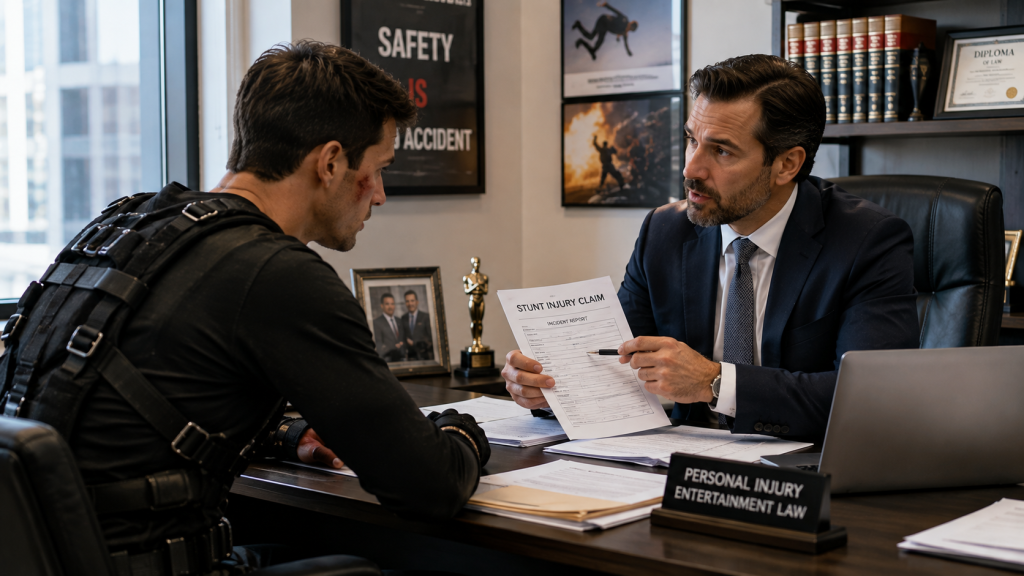
Legal guidance may help clarify whether workers’ compensation or another claim applies.
Our guide to the first 24 hours after an injury also discusses documentation and medical care following an accident.
How the New Rules May Affect Productions
The 2026 safety training requirements add another layer of preparation for productions involving stunt performers. Training alone does not address every possible hazard, but it may improve awareness of injury prevention practices.
Productions also need to consider the practical conditions surrounding individual sequences. A stunt may require specialized equipment, rehearsals, protective gear, trained personnel, and appropriate medical planning.
Safety planning may also need to account for repeated takes. A sequence that appears manageable once may create greater physical strain when repeated throughout a long production day.
Stunt Safety Is Becoming a Larger Industry Focus
The renewed attention to concussion awareness is part of a broader conversation about performer safety.
SAG-AFTRA’s 2026 safety initiatives include dedicated stunt programming and resources addressing physical protection on set.
The new training requirement also shows that safety education remains a significant issue in negotiations between performers and producers.
For stunt professionals, understanding concussion symptoms and workplace safety procedures may help them recognize risks before an incident becomes more serious.
Final Thoughts
Concussion risks remain a serious concern for stunt performers because physical impacts are part of many production sequences. The entertainment industry is placing greater attention on awareness, training, and injury prevention in 2026.
The new SAG-AFTRA safety training requirement adds a significant development for stunt professionals. Understanding concussion symptoms, reporting injuries, and documenting incidents may also help workers navigate the aftermath of an on-set accident.
Anyone injured during a stunt may benefit from learning about the legal and workplace protections that apply to their particular situation.