
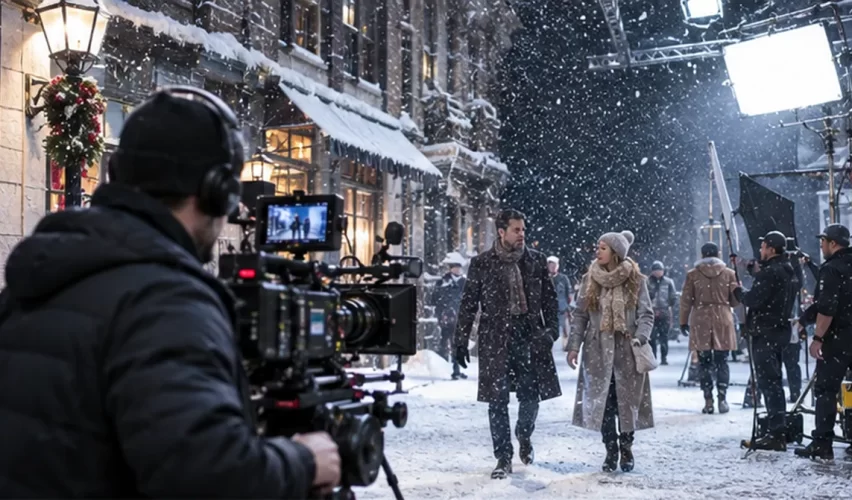
Artificial snow helps filmmakers transform an ordinary soundstage into a winter street, mountain village, or blizzard scene. But the materials that make snowfall look convincing can also create workplace hazards. Depending on the product and how it is applied, performers and crew may face airborne particles, slippery surfaces, reduced visibility, or electrical and fire risks.
These concerns received fresh attention on September 25, 2026, when the Industry-Wide Labor-Management Safety Committee issued Safety Bulletin #47: Artificial Snow. The guidance addresses material selection, exposure, filming, cleanup, and safe disposal. For anyone working on holiday productions or winter-themed scenes, understanding artificial snow film set injuries is especially relevant.
Why Artificial Snow Is a Film-Set Safety Issue in 2026
Artificial snow is not one product. Productions may use shredded paper or cellulose, starch-based material, plastic flakes, foam, chipped ice, or manufactured snow blankets. Some products are applied to scenery; others are blown into the air while cameras roll. Their safety considerations differ because their composition, particle size, application method, and surrounding conditions differ.
Bulletin #47 is part of the industry’s growing collection of recommended production safety bulletins. Relevant federal, California, and local workplace rules may impose enforceable duties that go beyond the bulletin.
Common Injuries and Hazards From Artificial Snow
The main safety question is not whether fake snow looks harmless. It is whether the particular material and filming method create foreseeable exposure or accident risks.
- Slips, trips, and falls: Loose flakes, wet foam, snow blankets, and concealed cables may affect footing.
- Respiratory irritation: Airborne material may irritate the nose or throat, particularly in sensitive people.
- Eye irritation: Wind-blown particles can reach workers who are close to effects equipment.
- Electrical hazards: Wet materials around lighting or electrical equipment can create dangerous conditions.
- Fire hazards: Some artificial-snow materials can burn, and fine airborne dust may introduce additional risks.
- Visibility problems: Falling snow effects can conceal steps, props, equipment, and moving crew members.
A slip on a decorated surface can result in a wrist injury, shoulder injury, fracture, or head impact. Our guide to proving liability in a slip-and-fall case explains why the condition of the surface and the available evidence matter.
What Does Safety Bulletin #47 Recommend?
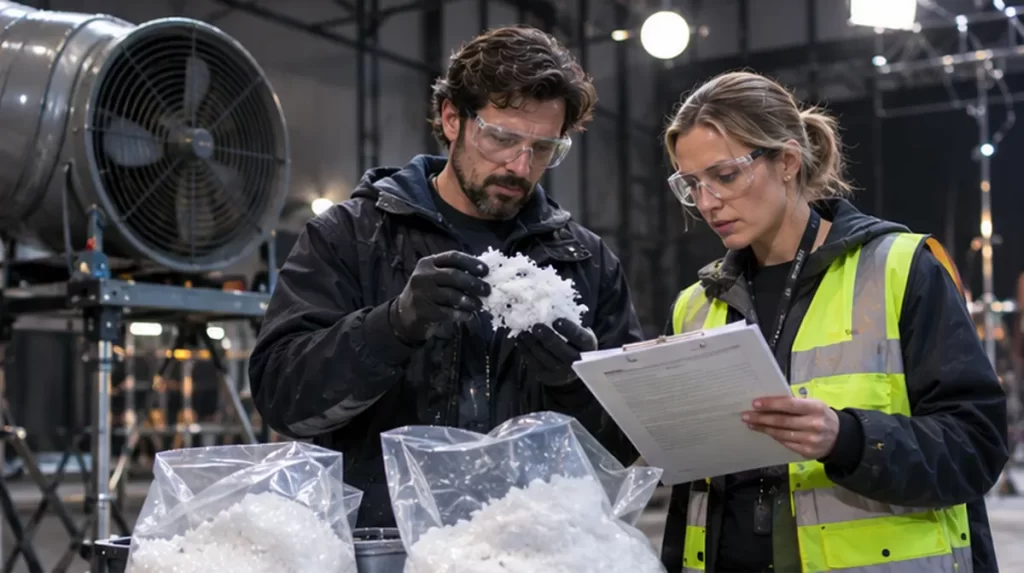
Before filming, productions should identify what the artificial snow contains and obtain its current safety data sheet, when applicable. Production staff should review the material’s potential hazards, exposure limits, manufacturer instructions, and cleanup requirements.
The bulletin also recommends evaluating whether air sampling or advice from an industrial hygienist is needed. Suitable controls may include ventilation, air filtration, reducing the amount of airborne snow, limiting exposure time, and keeping nonessential people away from the effect.
Equipment such as blowers, nozzles, hoses, and compressors should be maintained and inspected. The bulletin also calls for advance notice and a safety meeting about the planned effect, precautions, and how to obtain medical care.
Respiratory Exposure: Why Materials Matter
A performer who walks through a brief snowfall effect may have a different exposure from a crew member who handles bulk material or repeatedly operates an air blower. It would be inaccurate to assume that every kind of fake snow causes the same reaction.
Under the OSHA Hazard Communication Standard, employers covered by the rule must communicate hazards associated with hazardous chemicals, including through labels, safety data sheets, and training.
Bulletin #47 identifies possible temporary effects such as dry throat, eye irritation, and minor respiratory irritation. Children, older people, and individuals with respiratory conditions may be more sensitive.
How Fake Snow Can Create Slippery Floors
Snow effects may cover marks on the floor, hide cable runs, or change the traction of a walking surface. A performer could encounter an unexpected slippery area while moving between takes. Snow blankets may also create raised edges that become trip hazards.
Crews should inspect paths before filming, manage cords and props, and restore safe conditions after the effect is applied. The OSHA walking-working surfaces guidance addresses slip, trip, and fall hazards in general industry.
As our article about when choreography becomes stunt work explains, complicated movement and changing floor conditions deserve careful planning.
Fire, Electricity, and Special-Effects Equipment
Fake snow should not automatically be treated as fireproof. Certain products may be combustible, particularly when fine particles become airborne. Other snow effects can involve moisture that should not come into contact with energized equipment.
Bulletin #47 recommends keeping artificial snow away from ignition sources, using appropriate firefighting measures based on the product, and reviewing the related photographic dust guidance when fine powder is involved. The New York City Fire Department’s special-effects guidance also discusses artificial-snow materials and related fire precautions.
Productions that already use extensive lighting, cabling, or LED walls may have overlapping concerns. Our article on virtual production set accidents looks at how advanced equipment can complicate on-set risk management.
What If a Cast or Crew Member Develops Symptoms?
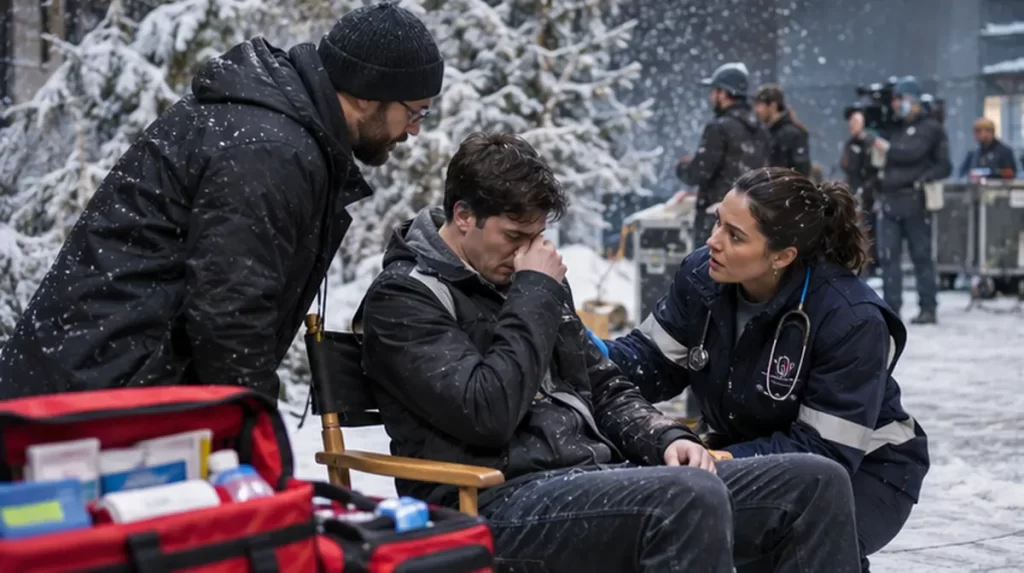
A worker experiencing breathing difficulty, significant eye irritation, dizziness, or other symptoms should leave the exposure area when safe and seek appropriate medical assessment. Severe breathing difficulties or other emergency symptoms require immediate emergency help. Do not assume a reaction is minor simply because the effect was described as artificial snow.
Report the incident to the designated production supervisor and preserve the product name, approximate exposure time, scene location, and any available safety data sheet. A clinician may find these details useful when evaluating the symptoms.
What Evidence Could Matter After an Injury?
Evidence may help show whether a hazardous condition existed and how the incident happened. Depending on the circumstances, useful information may include the call sheet, scene photographs, the product’s label or safety data sheet, equipment records, witness names, incident reports, and medical documentation.
When possible, document the exact place where a fall occurred before cleanup changes the scene. If respiratory symptoms are involved, record how long the effect was used, whether ventilation was operating, and who else was present. Our guide to witness statements after an injury explains the value of firsthand observations.
Can an Artificial Snow Injury Lead to Compensation?
In California, a qualifying work-related injury or illness may support a workers’ compensation claim. Benefits can depend on medical findings, the employment relationship, and other applicable rules. A person does not automatically have a separate negligence lawsuit against an employer simply because a film-set accident happened.
Some incidents may warrant investigating a potentially responsible third party, such as an outside contractor or equipment supplier. Whether any additional claim exists is fact-specific, and California workers’ compensation exclusivity rules may limit lawsuits against an employer.
Our existing article on filing a workplace injury claim provides background for workers concerned about treatment, benefits, and reporting.
How California Safety Advisors Fit Into the Picture
California’s Film and Television Tax Credit Program 4.0 includes a safety-advisor requirement for participating productions. Under that program, covered productions receiving the relevant tax credit must hire or assign a qualified safety advisor to perform risk assessments and complete a final evaluation. This is not a blanket requirement for every production in the state.
The California Film Commission’s safety overview describes the program. Risk assessment can be relevant when a production plans extensive effects, including artificial snow on indoor or outdoor sets.
Cleanup and Environmental Responsibilities
Snow-effect safety continues after the director calls cut. Leftover material may travel into drains, mix with water, or remain on walking surfaces. Bulletin #47 recommends selecting appropriate collection methods and disposing of material according to product instructions and applicable local requirements.
Final Thoughts
The September 2026 artificial-snow bulletin is a timely reminder that convincing screen effects can create real workplace hazards. The safest approach starts with identifying the material, evaluating exposure, planning the scene, briefing workers, and maintaining clear cleanup and emergency procedures.
For injured cast and crew, medical care comes first. Reporting the incident and preserving relevant evidence may also help clarify workplace benefits and possible legal options. Artificial snow should make a scene look realistic, not expose the people creating it to preventable harm.