
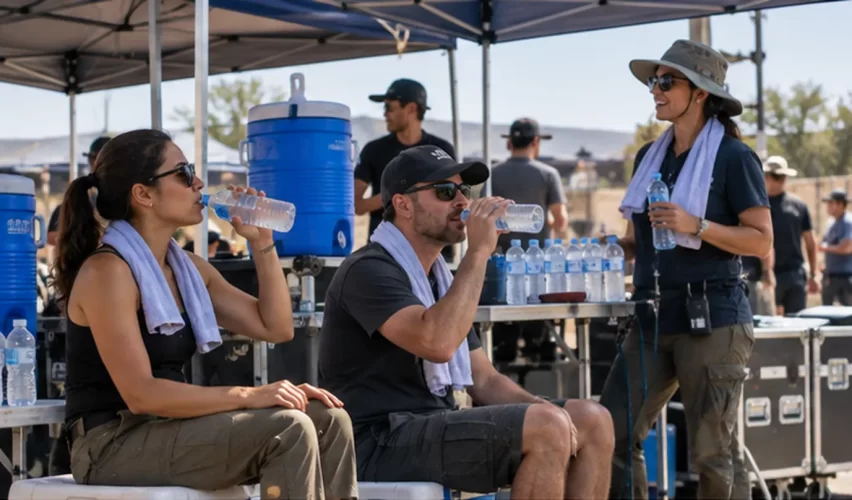
Long location shoots, heavy costumes, powerful lights, and crowded soundstages can expose entertainment workers to dangerous heat. For actors and camera operators alike, overheating is more than an inconvenience: heat illness can interfere with concentration, trigger medical emergencies, and interrupt a career. In 2026, film-set heat safety has become a timely workplace issue as producers revisit their plans for both outdoor and indoor shoots.
On October 21, 2026, the Association of Independent Commercial Producers (AICP) published a safety reminder addressing extreme heat and severe weather on set. It called attention to industry guidance on drinking water, shade, cool-down breaks, emergency response, and weather monitoring. Here is what cast and crew should know about heat illness on film sets, including California protections and possible injury claims.
Why Are Film Sets Vulnerable to Heat Illness?
A production can combine weather exposure with strenuous work. Grips carry equipment, electricians manage lighting, performers repeat physical scenes, and makeup teams work in warm trailers or confined spaces. Protective gear, wigs, period costumes, and special-effects makeup can make it harder to release body heat.
Heat risk is not limited to deserts or summer shoots. Indoor stages can become hot because of lighting, machinery, limited airflow, and high occupancy. Our article on virtual production set accidents explores other hazards associated with technology-heavy filming environments.
What Are the Warning Signs of Heat Illness?
Heat exhaustion may cause heavy sweating, weakness, headache, dizziness, nausea, or faintness. Heat stroke is a medical emergency that may involve confusion, collapse, seizures, or an unusually high body temperature.
According to CDC/NIOSH heat-stress guidance, workers and supervisors should recognize symptoms early and respond promptly. If someone becomes confused, loses consciousness, or shows signs of heat stroke, call emergency services immediately and begin appropriate cooling while help arrives.

California Rules for Outdoor Film Shoots
California has enforceable outdoor heat-illness requirements under Title 8, section 3395. Employers covered by the rule must provide accessible drinking water, shade under the conditions specified by the regulation, opportunities for preventive cool-down rest, training, and emergency-response procedures. For outdoor workplaces, shade is generally required when the temperature exceeds 80 degrees Fahrenheit and must be available upon request at lower temperatures.
At 95 degrees Fahrenheit or above, additional high-heat procedures are required, including effective communication and observation of workers. The Cal/OSHA heat-illness comparison guide explains the outdoor and indoor standards.
Indoor Heat Can Also Trigger Safety Obligations
California’s indoor heat-illness standard, section 3396, took effect in July 2024 and generally applies to covered indoor workplaces when temperatures reach 82 degrees Fahrenheit. Covered employers must address water, cool-down areas, worker training, acclimatization, emergency procedures, and written prevention planning. Additional assessment and control requirements apply at specified higher temperatures or when restrictive clothing or radiant heat adds to the risk.
On a production, this may be relevant to hot warehouses, unventilated studios, workshops, or enclosed sets. It is a mistake to assume that working under a roof automatically removes heat hazards.
What Should a Heat-Safety Plan Include?
A useful prevention plan begins before the crew call. Production managers should evaluate expected temperatures, work intensity, sun exposure, access to shade, available cooling spaces, and any clothing that restricts heat loss.
- Water: Supply cool, clean drinking water close to work areas and encourage regular drinking.
- Shade and cooling: Arrange usable shade outdoors and appropriate cool-down areas indoors.
- Work-rest planning: Modify call times, scene order, and rest opportunities when conditions warrant.
- Acclimatization: Closely observe newer workers and people newly assigned to hot environments.
- Communication: Make it clear how workers can report symptoms and request assistance.
- Emergency response: Identify who calls for help and how responders will reach the set.
The industry’s outdoor heat Safety Bulletin #35 summary also emphasizes added precautions for extreme temperatures. These industry bulletins are recommended guidance, while applicable occupational-safety regulations create separate legal obligations.
Costumes, Stunts, and Repeated Takes
A physically demanding scene can increase heat strain even when the air temperature seems manageable. Performers may wear multiple costume layers, body armor, helmets, or heavy makeup. Repeated fight choreography, running, or lifting can intensify physical exertion.
Safety decisions should consider the entire shooting schedule. As our guide to choreography-related injury risks explains, repetition and fatigue can increase injury risk. Our stunt performer safety guide examines other risks of high-intensity filming.
What If a Crew Member Becomes Sick?
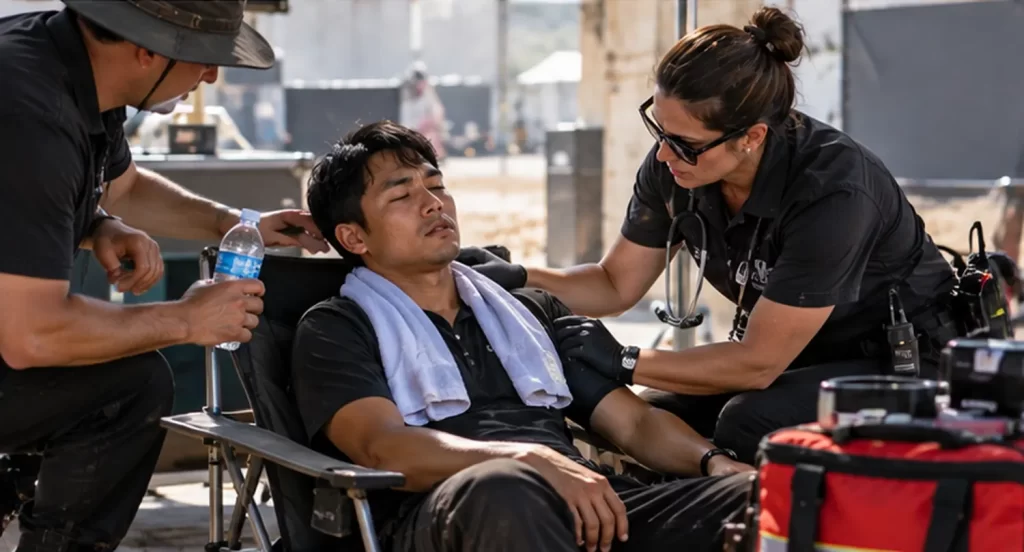
If a crew member reports dizziness, nausea, weakness, or other possible heat symptoms, work should stop for that person and help should be requested immediately. Move the worker to a cooler area when it is safe to do so, arrange assessment by a qualified medical professional, and follow emergency instructions. Confusion, collapse, or seizures require emergency services, not simply a longer rest break.
The incident should also be reported through the production’s established process. Coworkers who witnessed symptoms or the response may have useful information later. Our article on witness statements in injury claims explains why contemporaneous accounts can matter when facts are disputed.
Wildfire Smoke Can Add Another Outdoor Hazard
Hot weather sometimes coincides with smoke from nearby or distant wildfires. Smoke can affect a filming location even when flames are nowhere near the set. In California, the wildfire-smoke standard generally applies when the current air-quality index for fine particles, or PM2.5, is 151 or higher and exposure to wildfire smoke is reasonably anticipated, subject to exceptions.
Covered employers must monitor conditions and implement appropriate protective measures, such as changes to work locations or schedules and respiratory protection. The California wildfire-smoke worker protections explain the AQI thresholds and exceptions. Producers can check local conditions using EPA AirNow.
Can Heat Illness Lead to a Workplace Injury Claim?
A cast or crew member who suffers a work-related heat illness may qualify for workers’ compensation benefits, depending on employment status, the governing jurisdiction, and the medical evidence. Benefits may address treatment and some wage loss. Fault generally is not the central issue in an ordinary workers’ compensation claim, but reporting requirements and deadlines still matter.
Some incidents may also raise questions about a responsible third party, such as a contractor controlling a particular hazardous area. Those possibilities require individualized legal analysis; a safety violation does not automatically establish a separate civil lawsuit. Our guide to filing a workplace injury claim addresses employment concerns after an accident.
What Evidence Can Help Document an Incident?
Medical records are important, but the surrounding work conditions can also matter. If it is safe and permitted, an affected worker may preserve the call sheet, location and time, weather records, work duties, costume requirements, incident reports, photographs of cooling stations, and communications about water or breaks. Witness names and instructions from supervisors can help establish the sequence of events.
Keep a personal timeline of symptoms and treatment, without posting private information about coworkers or breaching lawful confidentiality obligations.
Do California Film Productions Have Safety Advisors?
Some qualifying California productions have an additional safety requirement. Under the state’s Film and Television Tax Credit Program 4.0, covered productions receiving that program’s tax credits must hire or assign a safety advisor to conduct risk assessments and prepare a final safety evaluation. This requirement is not a blanket mandate for every film shoot in California.
The California Film Commission’s safety program overview explains the scope. Regardless of tax-credit participation, production employers must comply with occupational-safety laws that apply to their operations.
Final Thoughts
Heat illness on film sets deserves attention whether the camera is rolling outdoors in direct sun or inside a warm studio. The October 2026 industry reminder makes this a particularly useful moment for cast and crew to revisit water access, cooling arrangements, warning signs, and emergency planning.
After a suspected work-related heat illness, prioritize medical care, report the incident, preserve relevant information, and learn which workplace protections apply. Early action supports recovery and helps clarify possible benefits or claims.